






Does your typical Saturday involve squeezing into tight downtown parking spots or towing a camper to the State Park? Choosing the right SUV starts by defining the mission, as the Compass fits the "compact" mold while the Grand Cherokee dominates the "mid-size" segment.
Expert tips and insights from Chadron Motor Company highlight exactly where their paths diverge. While the Compass offers nimble efficiency for daily commuters, the Grand Cherokee delivers the necessary muscle for heavy-duty Nebraska winters.
Industry standards define these categories by wheelbase length, but for most drivers, the decision comes down to real-world legroom and capability. We break down the critical specs to help you decide which set of keys belongs in your pocket.
Will It Fit Your Lifestyle? Dimensions and Maneuverability
While both vehicles clearly belong to the same family, the Compass is significantly easier to squeeze into a crowded spot at the grocery store. When comparing Jeep Grand Cherokee vs Compass dimensions, the Compass measures roughly 173 inches long - a full 20 inches shorter than its big brother. This compact footprint creates a tighter turning radius, making the Compass the best Jeep for highway driving and commuting if your daily routine involves navigating narrow downtown streets or a small garage.
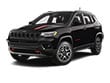 |
2024 Jeep Compass Trailhawk | Price: $23,924.00 | |
| Bodystyle: | Int. Color: DIAMOND BLACK | ||
| Engine: 2.0L | Odometer: 17249 | ||
| Transmission: Automatic | Stock #: RT160806 | ||
| Ext. Color: Diamond Black | Vin: 3C4NJDDN8RT160806 | ||
| CLICK FOR DETAILS | |||
Conversely, that extra size on the Grand Cherokee offers a distinct advantage when the wind picks up on the open road. The longer wheelbase and wider stance create a planted feel that absorbs bumps and minimizes swaying at speed. For drivers tackling long stretches of Nebraska highway, this stability translates to less fatigue behind the wheel and more confidence passing semi-trucks.
 |
2023 Jeep Grand Cherokee Overland | Price: $39,325.00 | |
| Bodystyle: SUV | Int. Color: Global Black | ||
| Engine: 3.6L V6 24V VVT | Odometer: 25643 | ||
| Transmission: 8-Speed Automatic | Stock #: PC508648A | ||
| Ext. Color: Bright White Clearcoat | Vin: 1C4RJHDG0PC508648 | ||
| CLICK FOR DETAILS | |||
Choosing the right size depends on whether you value agility in town or command on the interstate. However, exterior handling is only half the battle. Next, we look at how the cabin materials and digital features justify the price difference.
From Utility to Luxury: Tech and Interior Refinement
Most drivers expect their vehicle to operate as smoothly as their smartphone, a standard met by Jeep’s Uconnect 5 system. While the Compass offers a responsive interface for maps and music, the Grand Cherokee expands this capability with larger screens and a dedicated display for your co-pilot to manage navigation.
Beyond digital features, the physical environment separates these two distinct experiences. The Compass utilizes durable materials perfect for easy cleanup, whereas the Grand Cherokee employs acoustic glass to block wind noise for a library-quiet ride. This creates a clear choice regarding interior luxury: practical durability or premium isolation.
To help visualize the Uconnect technology features in new Jeep models and cabin differences, compare these key specs:
-
Touchscreen: Standard 8.4-inch (Compass) vs. available 10.1-inch (Grand Cherokee).
-
Audio: 6-speaker setup vs. available 19-speaker McIntosh system.
-
Materials: Cloth/Vinyl vs. available Palermo Leather.
With the cabin tech settled, the next major hurdle is determining if your luggage fits as well as you do.
The 'Grocery and Gear' Test: Cargo Space Realities
Cubic feet numbers on a spec sheet rarely help you decide if a stroller fits. The Jeep Compass offers roughly 27 cubic feet behind the rear seats, which easily swallows a week’s worth of groceries. However, the Grand Cherokee expands that cargo space to nearly 38 cubic feet, providing the necessary depth to slide in a large cooler and camping equipment without blocking your rearview mirror.
Versatility matters just as much as raw volume when you are hauling awkward loads. Both models feature 60/40 split-folding rear seats, allowing you to transport longer items like skis while keeping a passenger seat open. Smart design touches also include hidden under-floor storage, perfect for keeping emergency kits or valuables out of sight while parked at the trailhead.
This cargo volume comparison highlights that while the Compass handles daily errands, the Grand Cherokee is built for the long haul. Once your vehicle is fully loaded, the next challenge is ensuring it has the power to move that weight through Nebraska weather.
Taming the Nebraska Winter: 4x4 Systems and Towing
When winter hits, simply having four driven wheels isn't enough; how they grip matters. The Compass uses "Active Drive," engaging rear wheels only when slipping occurs to save fuel. In contrast, comparing Jeep Quadra-Drive II vs Active Drive systems shows the Grand Cherokee offers heavy-duty hardware that mechanically locks traction, helping you crawl out of deep drifts that might strand lighter vehicles.
Hitching a trailer reveals the most practical performance gap. The differences in towing capacity between these Jeep SUV models are stark: the Compass handles a utility trailer or jet ski perfectly, maxing out around 2,000 pounds. If your weekends involve a boat, the Grand Cherokee is essential, offering up to 7,200 pounds of capacity so you aren't white-knuckling the wheel on windy highways.
While the off-road capabilities of the Compass Trailhawk vs Grand Cherokee prove both conquer gravel roads, the Grand Cherokee’s larger engine provides superior confidence on steep climbs. That extra V6 or V8 strength ensures you never feel underpowered, though this performance impacts your weekly fuel budget.
Maximizing Your Miles: Fuel Economy and Cost of Ownership
If your daily routine involves more highway commuting than dirt trails, the price at the pump becomes a deciding factor. The Compass uses a smaller, efficient 2.0L Turbo engine designed to stretch every gallon, making it the practical choice for getting to work or school. A direct fuel efficiency comparison between compact and midsize models shows that the lighter Compass keeps your monthly gas budget significantly lower than its heavier sibling.
Stepping up to the Grand Cherokee means feeding a robust engine that prioritizes passing power over penny-pinching. You will visit the gas station more frequently, but that fuel purchases a smoother, quieter ride and the muscle needed to haul a family of five without straining the vehicle. It is a classic trade-off: paying a premium at the pump for the luxury of never feeling underpowered on the interstate.
Looking beyond the sticker price helps clarify the true long-term investment. The cost of ownership for a Jeep Compass vs Grand Cherokee involves more than just the initial down payment; it requires calculating insurance, maintenance, and fuel over the life of the car. The Compass offers a lower barrier to entry and cheaper daily operation, while the Grand Cherokee demands a higher budget to support its premium, heavy-duty capabilities.
Your Personalized Jeep Map: Who Wins the Compass vs. Grand Cherokee Battle?
You’ve moved past staring at window stickers and can now match these vehicles to your actual daily drive. The choice isn't just about the monthly payment anymore; it is about fitting the car to your Saturday morning routine.
If you are still stuck on how to decide between a compact and midsize Jeep, use this quick checklist to break the tie:
-
Commuters & Couples: Choose the Compass for fuel efficiency and easier downtown parking.
-
Growing Families: When determining if the Grand Cherokee or Compass is better for families, the Grand Cherokee’s rear legroom is the clear winner.
-
Weekend Warriors: Pick the Grand Cherokee if you need significant towing capacity.
The specs tell you what the car can do, but the drive tells you how it feels. Stop by Chadron Motor Company to test both options. Once you adjust the mirrors and hit the road, the right Jeep usually picks you.
Contact Us Today!
